
Electrical Permits in Miami-Dade County: A Builder's Guide
How the Miami-Dade permit process works for the electrical side of a job: which department has your address, master and sub-permits, the county's inspection codes and the search tools.
From KRW Electric, Florida certified electrical contractor EC13012832, based in Miami Beach.
Permits and Inspections
Builder's guide: Miami-Dade County
From the folio number to a final inspection
Start with the address, not the scope
The first question on any Miami-Dade permit is which building department has jurisdiction. Miami-Dade County's building department issues permits only for unincorporated Miami-Dade. Its own instructions say the county process applies to properties with folios that start with "30", and that each municipality in the county has its own building official who issues permits for work within that city's limits (Miami-Dade, how to apply for a permit). A house in an unincorporated neighborhood goes to the county; a house inside a city goes to that city, with its own portal, forms and inspectors.
Three of the larger cities, for example, run their own systems:
- City of Miami. Applications go through iBuild and plan review through ePlan (ProjectDox) (City of Miami, iBuild).
- Miami Beach. Permits, inspections and renewals run through Civic Access, the city's EnerGov self-service portal (Miami Beach Civic Access); older records are in the city's archival search (Miami Beach permit search dashboard).
- Coral Gables. The city uses a Tyler EnerGov self-service portal (Coral Gables self-service portal).
The folio number on the property tax bill tells you which side of the line you are on. If it does not start with 30, stop reading the county's instructions and open the city's. Everything below the next heading describes the county process for unincorporated addresses unless a city is named. The building department with jurisdiction over the address always has the final word on what it requires.
Master permit or electrical sub-permit
On a project with more than one trade, the general contractor usually holds a master (building) permit and each trade pulls a sub-permit that references it. The county's electrical permit page says an electrical permit can be a sub-permit citing the master permit number, and that temporary power for construction needs a master permit (Miami-Dade electrical permits). Stand-alone electrical work, such as a service change on an existing house with no other trades, can go in as its own electrical permit.
The cities follow the same logic with their own rules:
- City of Miami: a sub-permit can be requested only after the master permit is approved, and the contractor is added by trade and qualifier number (City of Miami, get a sub-permit).
- Miami Beach: work involving two or more trades needs a Master Building permit, and the electrical sub-permit follows it (Miami Beach building permits).
- Coral Gables: reviewers add the required sub-permits to the master (Coral Gables development services FAQ).
For a GC, the practical point is sequencing. Get the master permit number to your electrical contractor as soon as it exists, because the electrical sub-permit, and every electrical inspection, hangs off it. Our guide to master permits and electrical sub-permits goes further on who holds what.
Applying: e-permitting and the EPS Portal
For unincorporated addresses, the county splits submittals by whether the job needs plan review:
- No plan review. The county says electrical, mechanical and plumbing permits that do not require plan review can be obtained through its E-permitting system (Miami-Dade, how to apply for a permit).
- Plan review. Jobs with drawings are submitted through the EPS Portal by completing the online form and uploading documents (Miami-Dade EPS Portal). After submittal the county issues a confirmation number and, once intake accepts the package, a process number.
What to have ready before anyone opens the portal: the folio number, the master permit number if there is one, the qualifier's license number, the scope in plain words, and for plan-review jobs the electrical sheets (riser, panel schedules, load calculation) required for the job. For commercial work, the county publishes an electrical plan review guideline that cites the 2023 8th Edition Florida Building Code and NFPA 70 (2020) (Miami-Dade commercial electrical guideline). Florida's 8th Edition adopts NEC 2020 for electrical work (FBC-Building Chapter 27); the 9th Edition is proposed to take effect Dec 31, 2026 and is not final (Florida Administrative Register notice).
State law also sets review clocks: 30 business days for buildings under 7,500 square feet, 60 for 7,500 square feet or more, and 5 business days to tell an applicant the application is incomplete (section 553.792, Florida Statutes).
Miami-Dade's electrical inspection codes
Every inspection request in unincorporated Miami-Dade uses the permit number and a three-digit inspection code. These are the county's electrical codes as published on its inspection codes page (Miami-Dade inspection codes):
| Code | Inspection | When it typically comes up |
|---|---|---|
| 074 | Foundation Grounding | Before the foundation is poured, when the grounding electrode is in the footing |
| 023 | Underground | Trenches and underground raceways, before backfill |
| 006 | Slab | Raceways in or under the slab, before the pour |
| 012 | Temporary for Construction | Temporary power for the job site |
| 013 | Temporary for Test | Temporary power to test equipment |
| 002 | Rough | Wiring and boxes in place, before walls are closed |
| 048 | Rough/Slab (Pools) | Pool electrical rough and bonding |
| 064 | Accessibility | Accessibility items where they apply |
| 001 | Final | Devices, fixtures and equipment installed and labeled |
The county's electrical inspection checklist lists what inspectors look at stage by stage: burial depth and warning ribbon at underground, raceway types and conduits in footings at slab, and at rough the clearances or nail plates, box fill, fan-rated boxes, bonding and interconnected smoke alarms on AFCI circuits (Miami-Dade electrical inspection checklist). The rough-in inspection checklist walks through those items.
Requesting and tracking inspections
The county takes inspection requests online through its permits menu or by phone at the Permit Counter, 786-315-2100, and requests must come in before 4 p.m. one business day before the inspection (Miami-Dade inspections). You need the permit number and the three-digit code from the permit card or the codes list. The county also offers virtual inspections by video call, and you can follow the day's routes in its Track Inspections tool (Miami-Dade Track Inspections).
In the cities:
- City of Miami: schedule through iBuild, by phone at (305) 416-1100 option 2, or through 311, using the trade sub-permit number (City of Miami, schedule an inspection).
- Miami Beach: schedule in Civic Access or at 305-673-7610 (Miami Beach inspections).
- Coral Gables: inspection cancellations go to 305-460-5245 (Coral Gables development services FAQ).
Statewide, permit offices must accept inspection requests electronically (section 553.79, Florida Statutes).
Searching permits, and checking for open or expired ones
Before a remodel or an addition, pull the property's permit history. The county's public permits menu includes Permit History, Open Permits by Folio, Open Master Permits, a Master/Subsidiary Cross-Reference and Inspection Request (Miami-Dade e-permitting menu). The cross-reference is the quickest way to see which trade sub-permits hang off a master and whether each one has passed final. The City of Miami's search takes a process number, permit number, address or 13-digit folio (City of Miami permit search). Our guide on how to search permits in Miami-Dade covers each tool step by step.
If an old permit shows as expired, the county handles it through a notarized Request for Expired Permit Check. Where a newer permit covered the same work, the older one can be cancelled as "Superseded" (Miami-Dade expired permit check). Temporary power runs on its own clock: the county says temporary-for-test permits are valid 180 days for elevators and 30 days for other buildings (Miami-Dade electrical permits).
Two state rules change the math in 2026. A single-family permit now stays valid for 1 year after issuance, or until the next Florida Building Code edition takes effect, whichever is later (section 553.79, Florida Statutes; HB 803 bill summary). And an expired permit whose work is substantially complete can be closed without a new permit under the code in effect when it was applied for; an owner can hire a new contractor to close it, and that contractor is liable only for its own work (section 553.79(16)).
City rules differ. The City of Miami offers an Extension for an active permit or a Completion for an expired one, each giving 180 days (City of Miami, extension or completion). Miami Beach handles renewals in Civic Access within 180 days of expiration (Miami Beach expired permits and renewals). See open and expired permits in Florida for more.
Notice of Commencement before the first inspection
Under Florida's construction lien law the owner records a Notice of Commencement with the county clerk before an improvement starts, and a certified copy or a notarized statement of filing is posted at the job site. It must be recorded and posted before the first inspection, it is void if work does not start within 90 days of recording, and it expires 1 year after recording unless a later date is stated (section 713.13, Florida Statutes). The permit office needs a copy before the first inspection when the direct contract is above the statutory threshold (section 713.135, Florida Statutes).
The Miami-Dade Clerk records in person, by mail or by eRecording, and the notice has to be the original, signed by the owner and notarized (Miami-Dade Clerk official records). Where the statute requires the notice, get the recorded copy to the permit office before the first electrical inspection is booked. Our Notice of Commencement guide covers thresholds and timing.
The High-Velocity Hurricane Zone
Miami-Dade and Broward make up Florida's High-Velocity Hurricane Zone (HVHZ definition, FBC-Residential R202). For electrical work the zone matters at the outside of the building. In the HVHZ rooftop section, rooftop equipment and its supports are secured to the structure for the Chapter 16 wind loads, and rooftop conduit is raised at least 8 inches above the finished roof (FBC 1522, HVHZ rooftop structures).
Florida's product approval categories cover items like windows, doors, roofing and shutters; electrical equipment is not one of them (section 553.842, Florida Statutes), and the county's Notice of Acceptance search has no electrical category (Miami-Dade product control search). What applies to exterior panels, disconnects, meter cans and generators is how they are mounted and anchored, so ask the building department what it wants to see for anchorage before equipment is set. The HVHZ equipment anchorage guide goes deeper.
Generators carry extra steps. The county's generator brochure, an older document, has required signed and sealed PE plans and a generator set above base flood elevation or the required floor elevation (for residential, the higher of BFE or crown of road plus 8 inches) (Miami-Dade generator installation brochure). Confirm the current checklist before submitting. Older buildings also face recertification at 30 years and every 10 years after (Miami-Dade recertification); see the electrical side of recertification.
How KRW Electric fits on a Miami-Dade job
KRW Electric Company LLC is a Florida certified electrical contractor, license EC13012832, based in Miami Beach and working across Miami-Dade, Broward and Palm Beach. On the jobs we wire, we handle the electrical permit and the inspections: the sub-permit under your master, the inspection requests by code, and the corrections if an inspector writes one up. You can check the license on the state's lookup (DBPR license verification).
For builders that usually means new construction electrical, rough-in wiring and finish electrical, plus panel and service upgrades and generators on existing homes. Our page for general contractors explains how we work under your schedule, and the South Florida electrical permits guide collects every piece in this series, including the Broward and Palm Beach guides and a side-by-side comparison of all three counties.
Have a Miami-Dade job coming up? Send us the address and scope or call (305) 359-7312. Rated 5.0 on Google across 118 reviews.
WHO WE WORK WITH
SERVING HOMES, BUSINESSES AND CONSTRUCTION PROJECTS
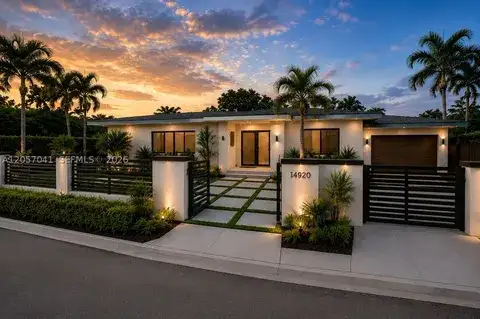

A reliable electrical partner for renovations, additions, build-outs and new-construction projects.

Professional electrical repairs and upgrades that help keep your operation safe, efficient and open for business.
Need Electrical Service?
Let's Get To Work.
Call Now For Immediate Response.
Planning Electrical Work?
Contact KRW Electric 365 to discuss residential service, remodeling, commercial electrical work or new construction.
Related reading
Guides and pages that go further on this work.
Miami-Dade permit questions builders ask
Straight answers from a licensed South Florida electrical contractor.
Does the county or the city issue my electrical permit in Miami-Dade?
It depends on the address. The county issues permits for unincorporated Miami-Dade, identified by folios starting with 30; each city has its own building official (Miami-Dade, how to apply).
Can an electrical permit be a sub-permit in Miami-Dade?
Yes. The county's electrical page says an electrical permit can be a sub-permit citing the master permit number, and temporary power needs a master permit (Miami-Dade electrical permits).
How do I request an electrical inspection in unincorporated Miami-Dade?
Online or at 786-315-2100 before 4 p.m. one business day ahead, with the permit number and the three-digit inspection code (Miami-Dade inspections).
What is the Miami-Dade inspection code for an electrical rough?
002 is Rough and 001 is Final. Slab is 006, Underground 023 and Foundation Grounding 074 (Miami-Dade inspection codes).
How long does a single-family permit stay valid in 2026?
Since July 1, 2026, 1 year after issuance or until the next Florida Building Code edition takes effect, whichever is later (section 553.79). Ask the department about extensions.
Does KRW Electric pull the permit?
Yes. KRW Electric handles the electrical permit and the inspections on its jobs, under Florida certified electrical contractor license EC13012832.