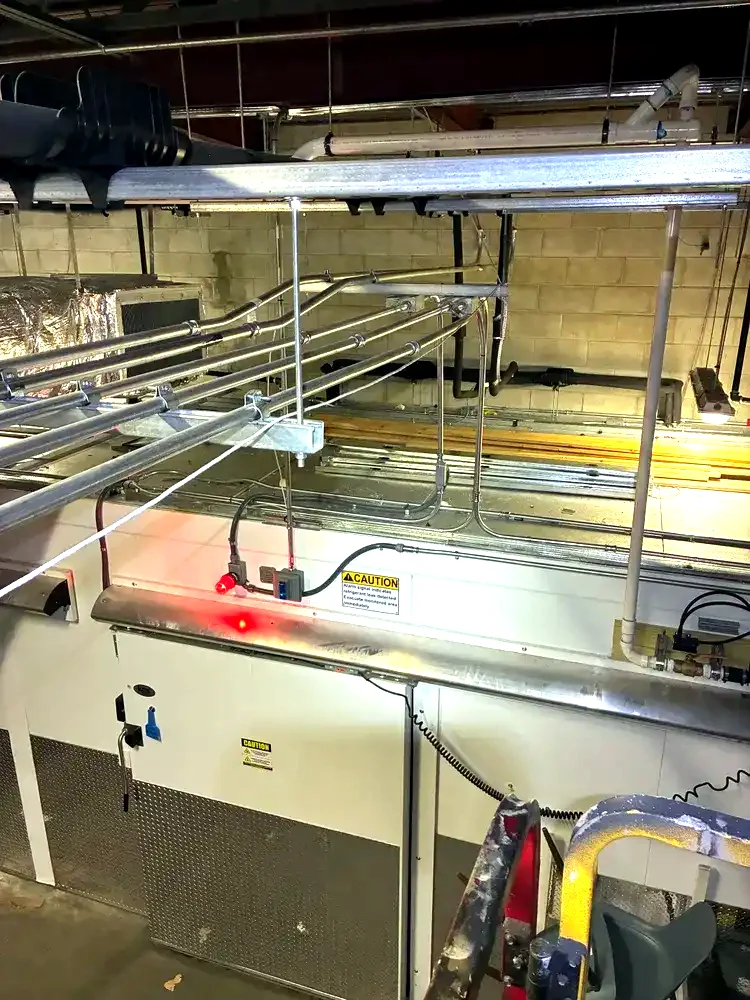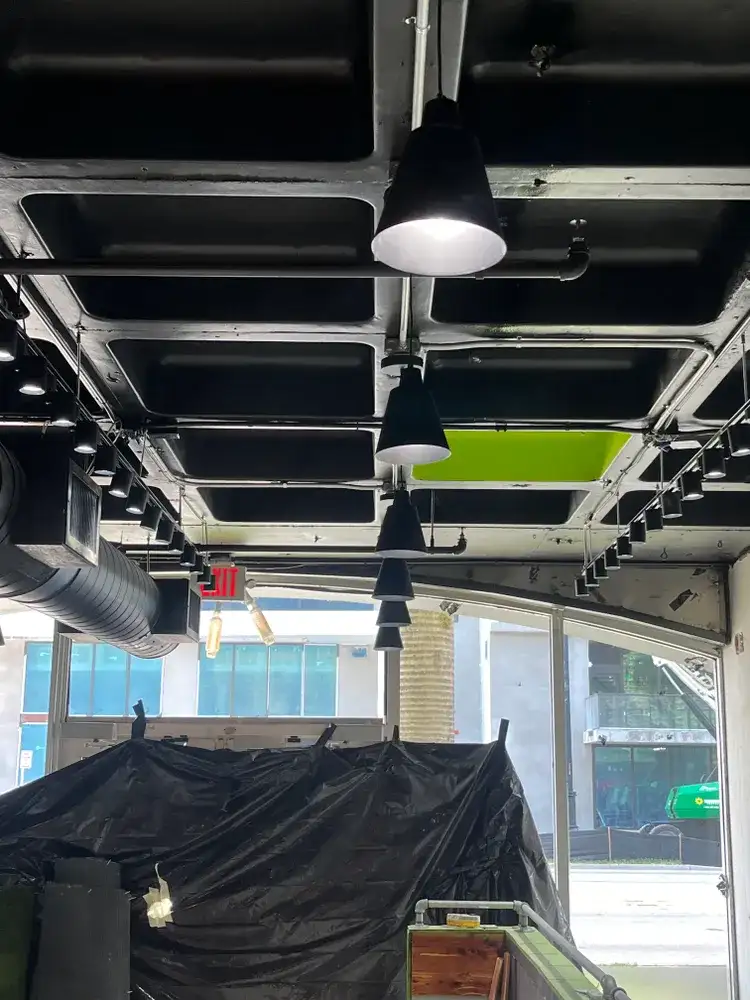
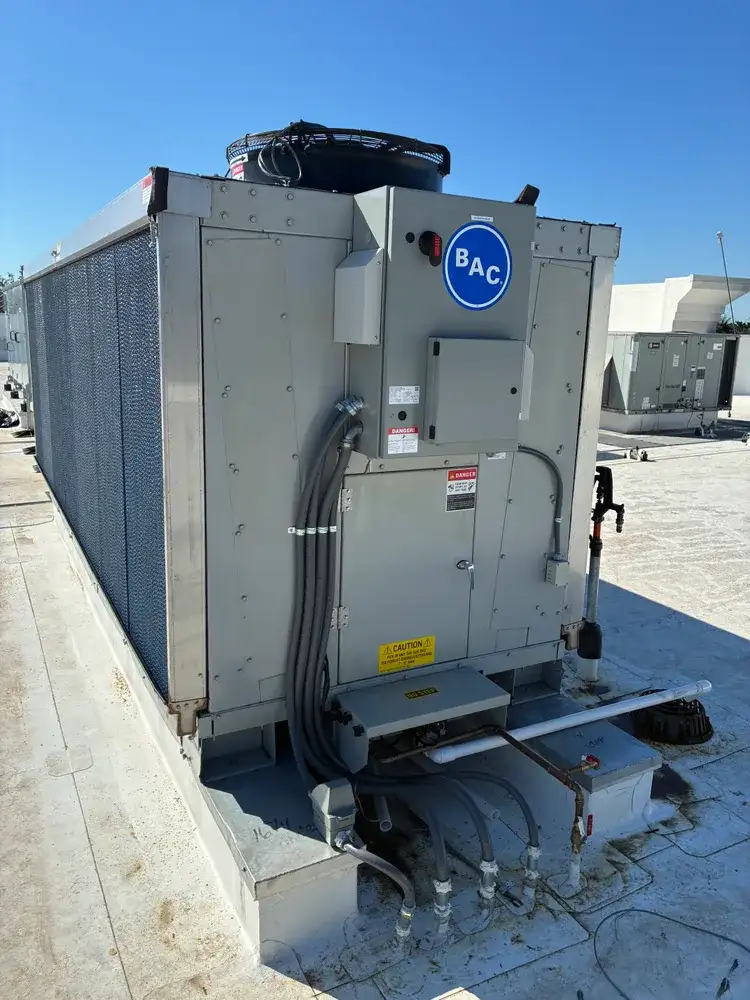
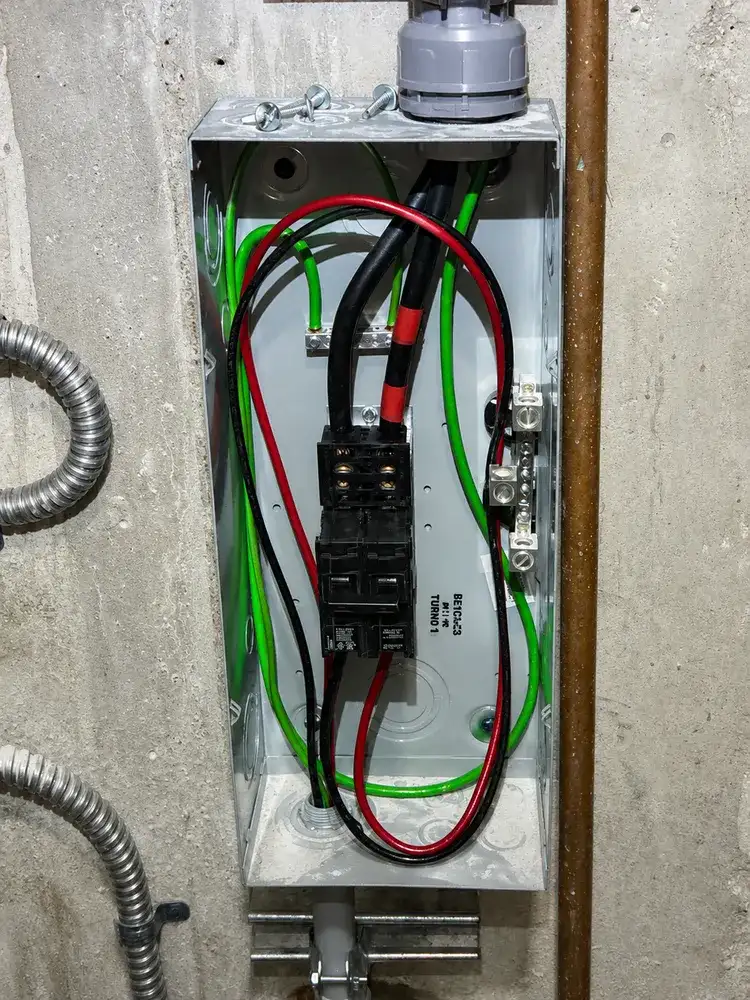

Commercial electrical contractor, EC13012832
Commercial Electrical Work in Miami-Dade, Broward and Palm Beach
What a commercial electrical contractor does for a South Florida business
A commercial electrician works on buildings where the electrical system serves a business, a tenant, a common area or a whole building rather than a single household. The work is bigger in one direction (three-phase services, switchboards, feeders, lighting controls, life-safety circuits) and more constrained in another: it has to fit a construction schedule, a lease, a landlord's rules, an inspector's sequence and a business that usually cannot stop.
KRW Electric is a commercial electrical contractor licensed in Florida under EC13012832 and based in Miami Beach. We work for four kinds of client, and each needs something different from an electrical contractor:
- General contractors need an electrical sub who prices the drawings accurately, holds the program, turns inspections on time and closes out cleanly.
- Developers need the electrical decisions that drive cost (service size, utility coordination, meter arrangement, EV capacity) settled before they are expensive to change.
- Property managers and condo associations need one contractor who knows the building, keeps records and fixes causes rather than symptoms.
- Business owners and tenants need power where the equipment is, done without closing the doors longer than necessary.
The rest of this page sets out how that work is organized: the three kinds of commercial job, the scope system by system, the industries, and the South Florida conditions that change how a job is planned here compared with almost anywhere else.
The three kinds of commercial electrical work
Almost every commercial call falls into one of three kinds of work. They are priced, scheduled and permitted differently, so it helps to know which one you have before you ask for a number.
Ground-up construction
A new building or a new shell: preconstruction and design-assist with the engineer of record, the utility service application, temporary power, underground and slab work, service and distribution, rough-in, inspections, energization and closeout. The electrical contractor is one trade in a sequence, and the program sets the pace. Our commercial new construction electrical page walks through that sequence the way a GC sees it.
Remodel, renovation and tenant improvement
Existing space made to work for a new use or a new tenant: demolition and making circuits safe, a capacity check against the new equipment list, new branch circuits and lighting, emergency and exit lighting, low-voltage pathways, permits and inspections, often in a building that stays open around the work. The commercial remodel and tenant improvement electrical page covers build-outs, vanilla shell versus turnkey delivery and the landlord/tenant split.
Service, maintenance and repair
Buildings that are already running: troubleshooting repeat breaker trips and partial power loss, repairs, panel and service upgrades, preventive maintenance, code-violation correction, inspection reports and emergency calls when something fails during business hours. This is the work that keeps a property manager's portfolio open between projects.
Commercial electrical scope, system by system
Most bids are written by trade scope, so here is ours. Each link goes to a page that explains what the work involves and what decisions it depends on.
- Service entrance, switchgear and three-phase power: utility coordination, service equipment, switchboards, distribution panels, feeders and metering. If you are not sure what the building has, start with three-phase power: do you have it, and do you need it.
- Panel and service upgrades: replacing obsolete or undersized panels and increasing capacity when the business has outgrown the service.
- Commercial lighting and lighting controls: interior and site lighting, LED retrofits, occupancy and daylight controls, sign and display power.
- Life-safety electrical: emergency and egress lighting, exit signs, and the power circuits that alarm and detection equipment depend on. The monitored alarm system itself is specialist work for a licensed alarm contractor; we coordinate with that contractor.
- Low-voltage cabling: data, security and AV cabling and pathways, planned alongside the power so the two do not fight for the same wall space.
- Dedicated circuits and equipment connections: HVAC, refrigeration, kitchen equipment, pumps and machinery, each on a circuit sized to the nameplate.
- Tenant and business equipment power: workstations, point-of-sale, relocations and the capacity check before new equipment is ordered.
- Commercial EV charging: workplace, retail and multifamily chargers, load management and conduit for future stations.
- Surge protection: panel-level protection for sensitive equipment in a region with frequent lightning.
- Commercial electrical permits and inspections: how permits, plan review and inspections work across Miami-Dade, Broward and Palm Beach.
- Preventive maintenance: scheduled inspection of panels, connections and lighting, with findings reported in order of urgency.
- Backup power: standby power for a business starts with deciding which loads must stay on, how the transfer equipment separates them and where the generator can legally and safely sit. Our generator installation page explains how those decisions are made.
Industries we work in
The electrical scope changes with the use of the space. A restaurant is a load and ventilation problem; a medical office is a documentation and equipment problem; a warehouse is a distance and lighting problem. These pages go into each one:
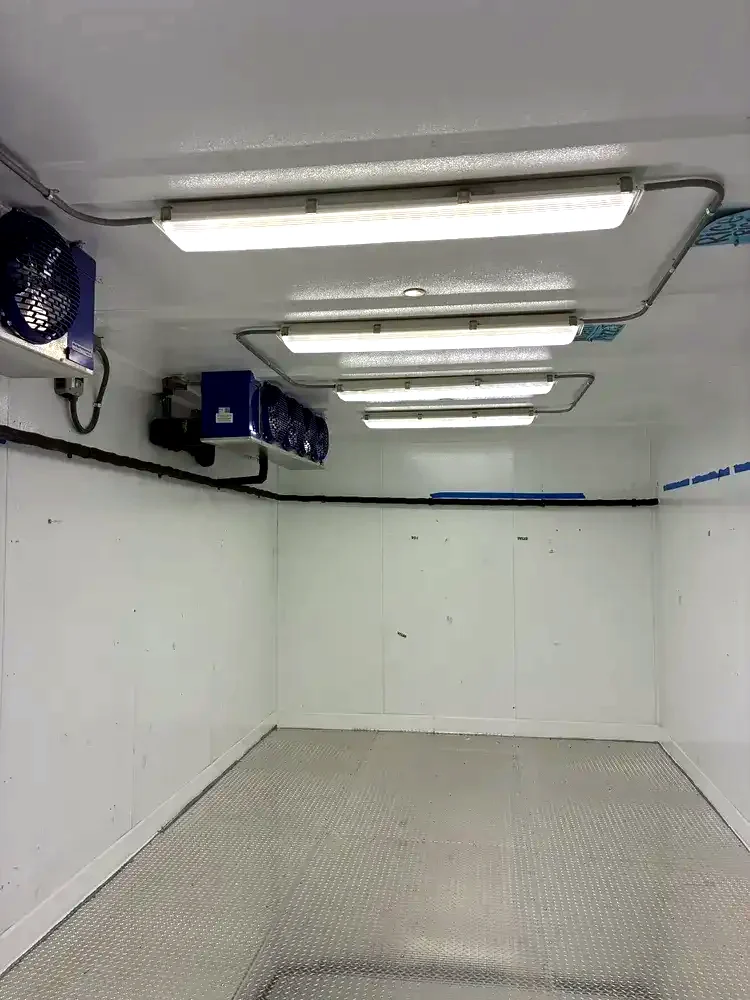
- Restaurant electrical contractor: kitchen equipment circuits, hood and exhaust power, walk-in coolers, and the order in which a kitchen line gets connected. See also the restaurant build-out electrical checklist.
- Office build-out electrical: workstation power, conference rooms, lighting controls and data pathways.
- Retail electrical contractor: storefront and display lighting, sign power, point-of-sale circuits and openings that cannot slip.
- Medical office electrical: equipment circuits for exam and treatment rooms, imaging and lab equipment power, and emergency lighting.
- Warehouse and industrial electrician: three-phase machinery, high-bay lighting, dock equipment and long feeder runs.
We also work on condominium and managed residential buildings, where common-area lighting, meter rooms, pool and pump equipment, garage lighting and EV charging sit under an association rather than a single owner. Our property manager page covers how that work is scoped and recorded.
How we work with GCs, developers, property managers and owners
General contractors
We price from the drawings and specifications, list our assumptions and exclusions in writing, and flag conflicts we find in the documents before they turn into change orders. On site we work to your schedule and sequence, call inspections when the work is ready rather than when it is almost ready, and hand over panel schedules and test records at closeout. The electrical subcontractor for general contractors page and the guide to what GCs should require from an electrical subcontractor go further.
Developers
The decisions that set electrical cost are made early: service size and voltage, where the utility equipment goes, how many meters, whether the parking is ready for EV charging. We help the developer and the engineer of record test those decisions against real loads during design. See electrical contractor for developers.
Property managers and associations
One contractor across the portfolio, written findings, scheduled shutdowns with notice to tenants, and records kept for the next inspection or recertification. See electricians for property managers.
Business owners and tenants
We plan work around opening hours, stage shutdowns out of hours when the building allows it, and check capacity before you sign for new equipment. See electricians for business owners and getting electrical work done without closing the business.
License EC13012832 and what it means in Florida
Electrical contracting in Florida is regulated by the Electrical Contractors' Licensing Board under the Department of Business and Professional Regulation. Florida law defines an electrical contractor as a person with the experience, knowledge and skill to install, repair, alter, add to or design electrical wiring and equipment in compliance with law (section 489.505, Florida Statutes).
Florida has two kinds of electrical contractor license. The board's licensing FAQ explains that a state certificate lets the holder work anywhere in Florida, while a registered license is limited to the counties or cities where the contractor holds a local license. That matters to a GC running projects in more than one county: check which kind your electrical sub holds.
KRW Electric's license number is EC13012832. You can look it up on MyFloridaLicense.com to see its status and license type. Electrical permits on our projects are pulled under that license, which puts the licensed contractor, not the owner or the GC, on record as responsible for the electrical work that the inspector checks.
What changes the job in South Florida
A commercial electrical scope written for a generic US market misses things that decide cost and schedule here.
Many building departments, not one
In Miami-Dade, the county building department handles only unincorporated areas; each of the county's 35 municipalities has its own building official overseeing permits and inspections. Broward's Building Code Division covers unincorporated Broward and the cities that contract with it, and Palm Beach County's Permit Center processes permits for the unincorporated area of the county. Submittal requirements, plan review times and inspection scheduling vary between them, so the first question on any job is which department has jurisdiction. Our commercial electrical permits page covers the practical differences.
The High-Velocity Hurricane Zone
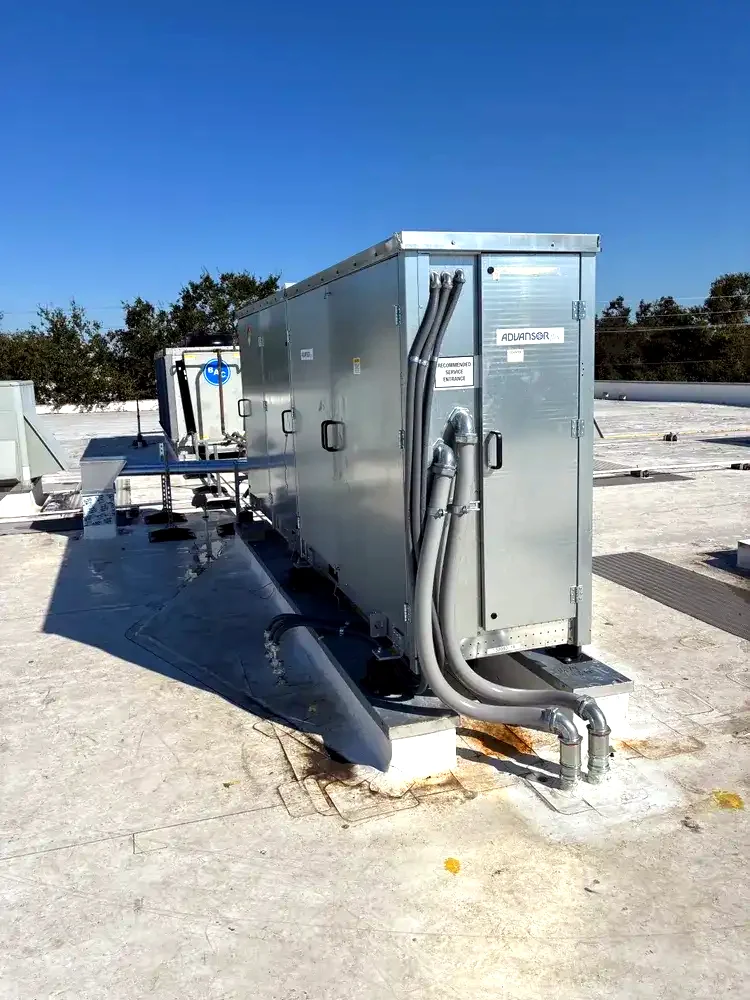
The Florida Building Code's High-Velocity Hurricane Zone covers Miami-Dade and Broward counties. For electrical work that mostly shows up outdoors and on the roof: service equipment, disconnects for rooftop HVAC, site lighting and conduit supports are mounted to the anchorage details the structural engineer specifies, and inspectors in those counties look for it.
Salt air and corrosion
On barrier islands and near the bay, salt air attacks exposed terminations, enclosures and fasteners faster than inland. Material choices for exterior enclosures, fittings and supports, and the maintenance interval on rooftop and parking-deck equipment, should reflect that. It is a common reason exterior lighting and rooftop disconnects fail early on coastal buildings.
Flood zones
Much of the region sits in mapped flood zones; the FEMA Flood Map Service Center shows the zone for any address. FEMA's guidance for public buildings notes that protecting main and standby power equipment is typically best achieved by elevating in place or relocating to an upper floor. Where service equipment, meters and generators go is a design decision to settle with the engineer and the building department early, not during rough-in.
Hurricane season and scheduling
The Atlantic hurricane season runs from June 1 to November 30, with most activity from mid-August to mid-October. Utility work, service shutdowns and exterior equipment setting are easier to schedule outside that window, and a job that is open during the season needs a plan for securing temporary power and exposed equipment when a storm is forecast. See storm readiness.
Utilities and code editions
Most of the tri-county area is served by FPL, which asks builders to contact it early because planning a new project can take a few months. Some cities run their own electric utility, including Homestead and Lake Worth Beach, and their process is different. The Florida Building Commission has set December 31, 2026 as the effective date of the 9th Edition (2026) Florida Building Code; projects that straddle that date should confirm with the building department which edition applies to their permit.
Condominium milestone inspections
Condominium and cooperative buildings of three or more habitable stories need a milestone inspection by the end of the year they turn 30, and the local agency may require it at 25 where conditions such as proximity to salt water justify it (section 553.899, Florida Statutes). Electrical repairs often follow those reports. See 40-year recertification and the electrical report.
How to request a commercial electrical bid
The fastest route to an accurate number is a complete package. Send what you have through get in touch:
- Drawings: the electrical sheets if an engineer has produced them, plus architectural plans, reflected ceiling plans and any equipment schedules. For a smaller job, a floor plan and photos of the panel and service equipment are a good start.
- Scope: what is included, what the landlord or owner is providing, and anything already on site that is being reused.
- Equipment list: make, model and nameplate data for kitchen, HVAC, refrigeration, machinery and EV equipment. The nameplate decides the circuit.
- Schedule: start date, inspection milestones, opening or turnover date, and any hours when the building must stay open.
- Site information: address (which decides the building department and utility), access rules, and who controls shutdowns.
If drawings do not exist yet, we can help with electrical planning and load review alongside your engineer before the design is fixed. For background on why service capacity comes first, see when a business outgrows its electrical service.
Where we work
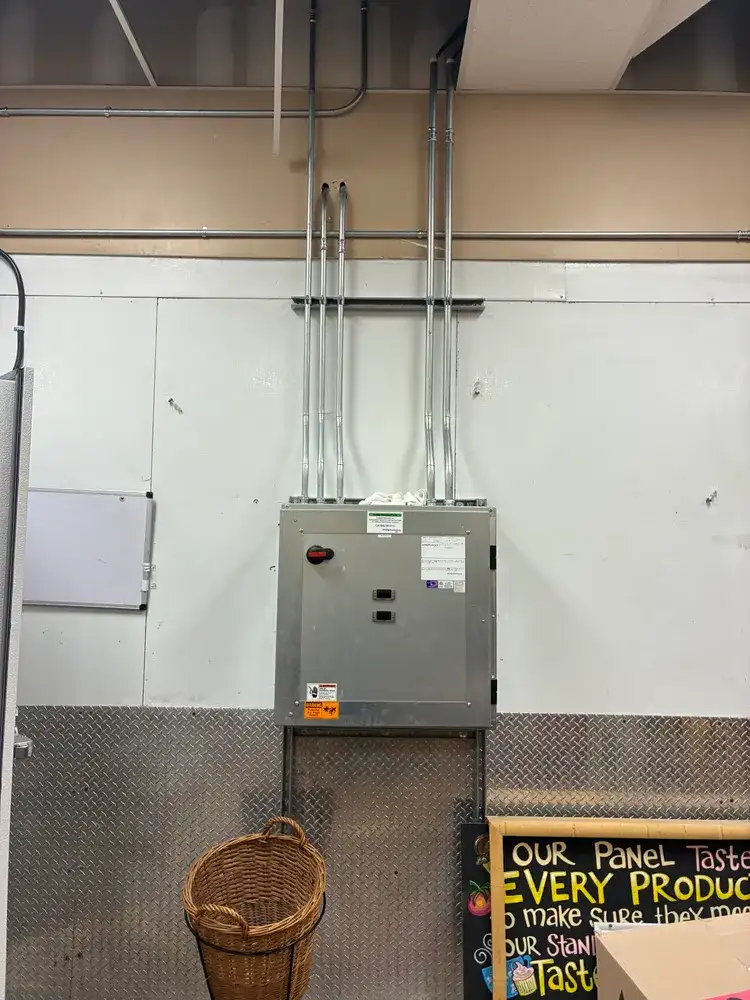
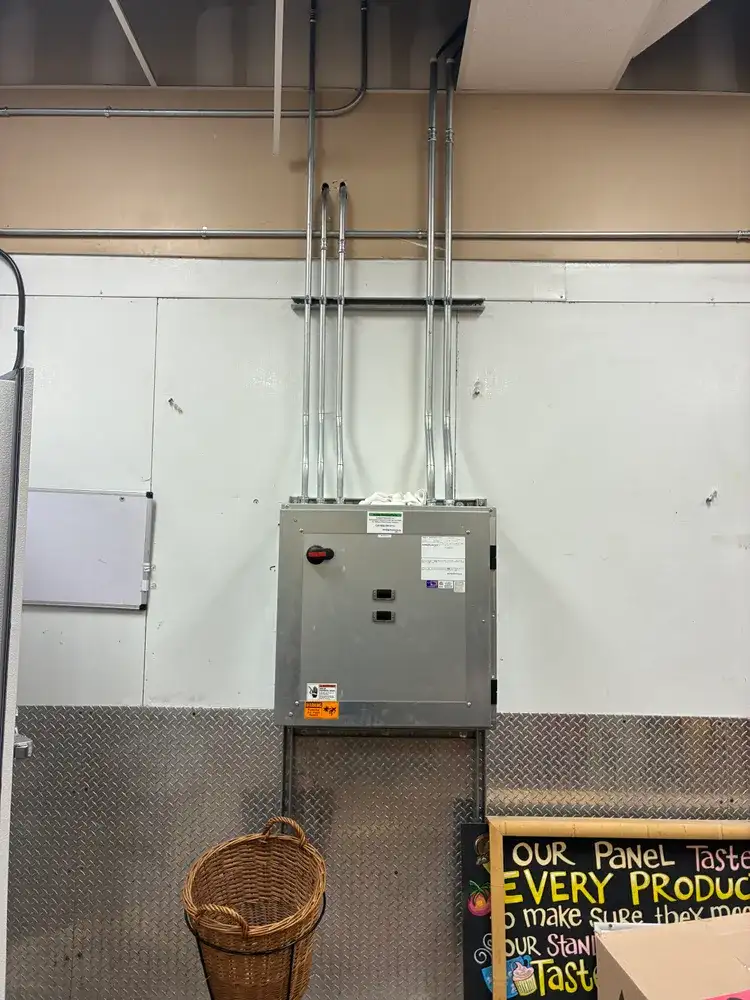
KRW Electric works across the three South Florida counties: Miami-Dade County, Broward County and Palm Beach County, from Miami Beach, Doral and Coral Gables to Fort Lauderdale, Boca Raton and West Palm Beach. The full list of cities is on our service area page, and photos of commercial panels, meter banks and switchgear are in the gallery.
To talk about a project, send the details through get in touch or call (305) 359-7312.